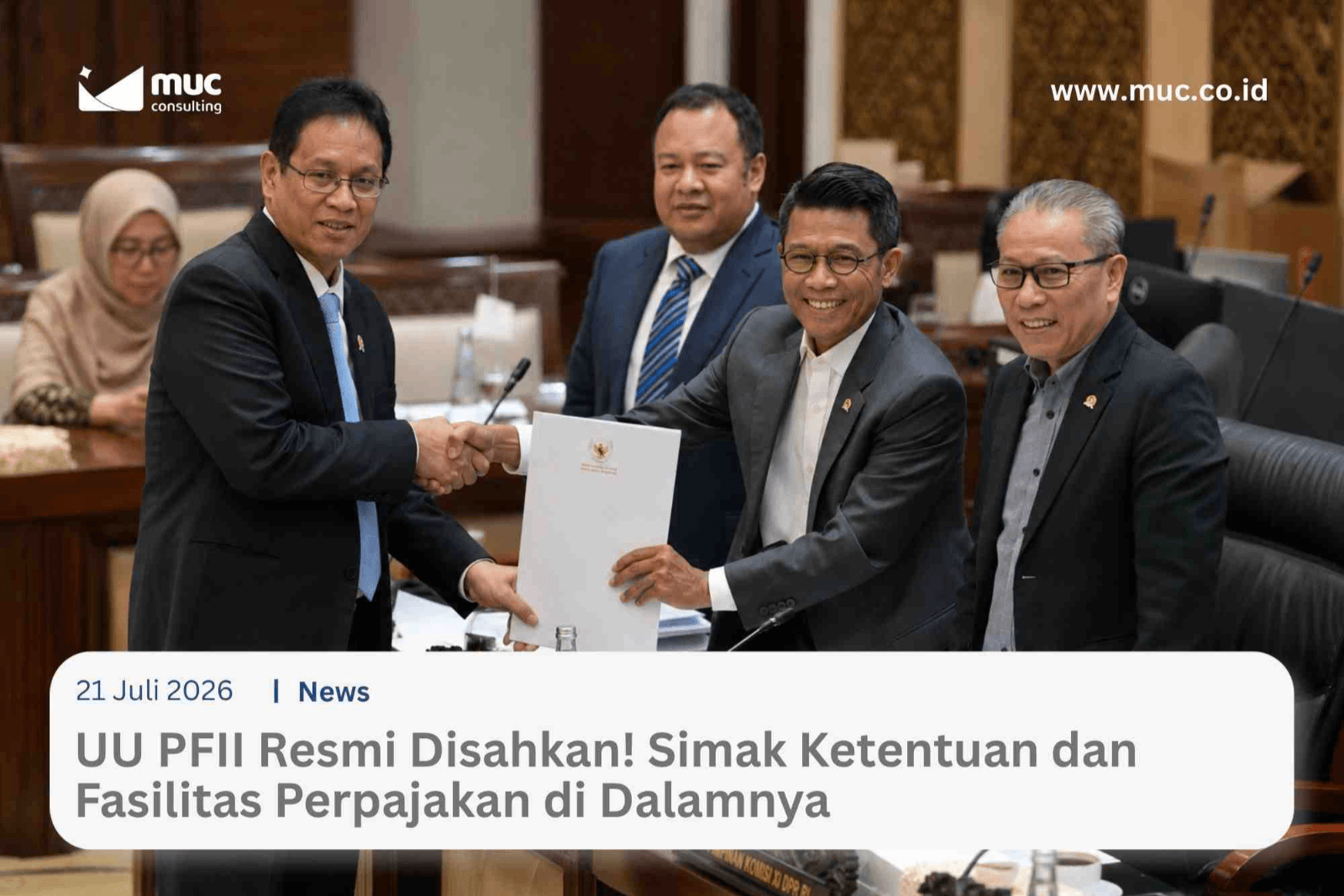
JAKARTA. Indonesia's House of Representatives (DPR) has officially approved the Bill on the Indonesia International Financial Center (IFC Law) into law during a plenary session on Tuesday (July 21, 2026). The legislation was enacted less than three months after deliberations on the bill began.
The IFC Law provides the legal foundation for establishing the Indonesia International Financial Center (IFC), which is designed as a modern, competitive, and internationally recognized financial hub. The law governs various aspects of the IFC, including its institutional framework, financial and supporting business activities, the establishment of a dedicated arbitration institution and special court, as well as support from both the central and regional governments.
Key Provisions of the IFC Law
The IFC Law consists of 10 chapters, covering the following key areas.
Chapter I: General Provisions
This chapter sets out the definitions, scope, and guiding principles governing the establishment and operation of the IFC.
Chapter II: Establishment, Status, and Objectives of the IFC
This chapter regulates the establishment of the IFC, its legal status, and the objectives of developing an international financial center in Indonesia.
Chapter III: Business Activities within the IFC
This chapter specifies the business activities that may be conducted within the IFC, covering both the financial sector and supporting industries.
Financial sector activities include:
Banking;
Insurance;
Islamic finance;
Capital markets, financial derivatives, and carbon exchanges;
Pension funds;
Financing services;
Venture capital;
Financial technology innovation;
Guarantee services;
International commodity trading or exchanges;
Bullion business;
Trust management services;
Financial instrument management;
Conglomerate holding companies;
Money markets, foreign exchange markets, and derivatives transactions;
Family offices; and
Other financial sector activities.
Supporting financial services include public accounting, appraisal services, notarial services, legal consulting, financial consulting, and other professional and supporting services.
Chapter IV: IFC Institutional Framework
This chapter establishes the governance structure of the IFC, consisting of six sections covering:
General provisions, including the delegation of authority for managing the IFC from the President to the Governor of the IFC and the establishment of the IFC Advisory Council;
The status, composition, appointment, and dismissal procedures, duties, and authority of the IFC Advisory Council;
The establishment of the IFC Management Authority, including its legal status, organizational structure, functions, powers, and initial capital;
The establishment of the IFC Financial Services Supervisory Authority, including its status, organizational structure, responsibilities, authority, and initial capital;
Accountability requirements, including reporting obligations to the President and the House of Representatives (DPR); and
Further institutional arrangements are to be regulated under a Presidential Regulation.
Chapter V: IFC Arbitration Institution
This chapter provides for the establishment of a dedicated arbitration institution as an alternative dispute resolution mechanism for businesses operating within the IFC.
Chapter VI: IFC Court
This chapter consists of six sections governing:
The status of the IFC Court as a special court;
Its jurisdiction over disputes arising within the IFC;
The composition of the court;
The authority of the chief judge;
Applicable procedural law; and
Court funding, which will be provided by the IFC Management Authority.
Chapter VII: Government Support
This chapter outlines the forms of support to be provided by both the central and regional governments for the development and operation of the IFC.
Chapter VIII: Tax Incentives and Other Special Facilities
This chapter consists of nine sections regulating:
General provisions on tax incentives and other special facilities;
Corporate Income Tax (CIT) incentives, including eligible taxpayers, available incentives, and qualifying requirements;
Value Added Tax (VAT) and Sales Tax on Luxury Goods (STLG) incentives, including eligibility criteria;
Customs incentives, including the types of incentives, eligible recipients, and applicable requirements;
Tax treatment of inheritances, including exemptions from certain tax provisions within the IFC;
Tax treatment of the IFC's initial capital funding;
Reporting obligations and tax administration requirements for businesses operating within the IFC;
Sanctions for the misuse of tax incentives; and
Other special facilities are available to businesses, professionals, and other parties operating within the IFC.
Chapter IX: Special Provisions for the IFC
This chapter regulates special arrangements applicable within the IFC, including the use of legal language, licensing mechanisms, the use of foreign currencies, and financial transactions.
Chapter X: Closing Provisions
The final chapter governs exemptions from certain existing laws and regulations, mandates the issuance of implementing regulations, specifies the law's effective date, and provides for its publication in the State Gazette.
Indonesia Seeks to Diversify Financing Sources
Minister of Finance Purbaya Yudhi Sadewa stated that the establishment of the IFC forms part of the government's strategy to diversify Indonesia's sources of financing. According to him, Indonesia needs its own international financial center to compete with leading global financial hubs.
Purbaya emphasized that the IFC is not intended to replace Indonesia's existing domestic financial system. Instead, it is designed to complement the national financial ecosystem while strengthening its integration with the global financial system.
He further explained that the IFC is built upon three strategic pillars. First, expanding access to capital and investment; second, promoting innovation and strengthening governance; and third, enhancing Indonesia's competitiveness while developing national capabilities and human resources. (KEN)